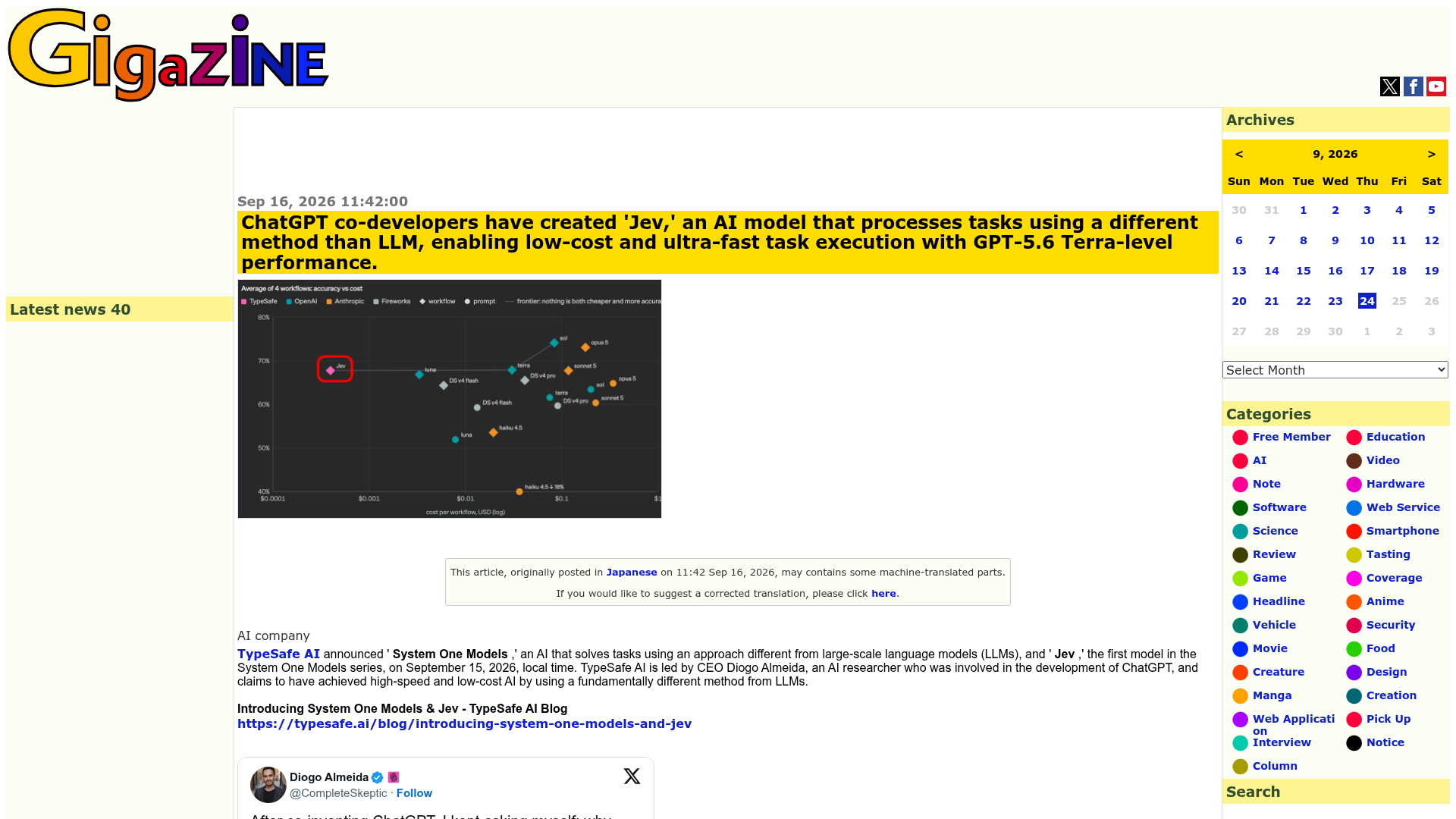
Automation systems often need to make a small judgment between two software actions: send a message to sales or support, assign a label, prioritize a case, or select a destination from a fixed set. Jev AI is designed around structured decisions, so these tasks are reasonable candidates for a controlled pilot. They are not assumed to work well without measurement.
This guide shows how to place a decision model into a workflow without giving it unchecked authority over business actions. It uses generic pseudocode rather than a specific SDK call; confirm exact request fields and supported primitives in the current Jev documentation.
Start with a decision contract
Before calling any model, express the decision as a clear contract:
- Input state: the minimum useful information, such as the message text, channel, customer tier, and relevant policy context.
- Allowed answer: an explicit list of outcomes, for example “billing,” “technical support,” “sales,” or “human review.”
- Action owner: application code that decides whether to create a ticket, notify a team, or hold the item.
- Failure policy: a safe route for missing data, low confidence, timeouts, or unsupported inputs.
Do not pass unnecessary customer data. Keep sensitive or regulated decisions behind appropriate access controls and human review.
Example: route an incoming support request
A support automation could normalize the incoming form, make one constrained routing decision, then let the workflow engine perform the approved action. At a high level:
message arrives
  → remove irrelevant fields and build a minimal state
  → ask Jev for one allowed support category
  → validate the returned type and confidence
  → high-confidence category: create or route the ticket
  → uncertain or invalid result: send to a human queue
The model should not receive credentials or perform the ticket mutation itself. The application owns permissions, checks that the result is one of the permitted values, and records what happened. This separation makes behavior easier to audit and change.
Good pilot tasks for Jev AI
Classification: assign an incoming item to one of a small, stable set of categories. Review confusion between neighboring labels and watch for categories absent from the original training examples.
Ranking: score candidate records against a query or policy, then use the score to order a shortlist. Compare against a non-AI baseline such as keyword matching or BM25, and measure relevance at the top of the list rather than average score alone.
Workflow routing: select a known destination based on the item’s state. Keep hard business rules, access checks, and irreversible actions in deterministic code. For consequential routes, send uncertain cases to review.
These are plausible patterns for a decision-oriented model, not a promise that Jev supports every integration or outperforms existing tools. Start with a narrow use case and the smallest data set that can meaningfully test it.
Set thresholds with evidence
A confidence score can be useful for deciding when to request human review, but do not choose a threshold by intuition alone. Run the model on labeled historical examples, plot error rates by confidence band, and estimate the cost of each mistake. The acceptable threshold for a low-impact tag may differ from the threshold for payment, eligibility, or account changes.
Test “unknown” and out-of-distribution examples explicitly. If the answer set has no correct option, forcing a choice may create a convincing but wrong route. Include a fallback option when the API allows it, or add an application-level review branch.
Observe every production decision
For each evaluated item, log a privacy-appropriate record of the task name, model version, allowed options, returned value, confidence, elapsed time, action taken, and any human correction. Do not store raw personal data by default. Review disagreement and correction rates regularly, and stop automated action if quality falls below the agreed threshold.
A good rollout starts in shadow mode: Jev makes recommendations but existing rules remain in control. Compare outputs, investigate disagreements, and only then allow a narrow, reversible action to proceed automatically. Keep a kill switch and a documented fallback.
What others are saying about Jev AI
Simon Willison describes classification and search reranking as promising shapes for Jev, including a pattern where conventional retrieval narrows a list and a decision model scores candidates. His hands-on discussion also cautions that Jev is a black box and that its own documentation notes weak spots. That makes a limited pilot and transparent fallback more important, not less.
Joe Maddalone’s developer walkthrough shows a practical TypeScript-oriented exploration. Treat a demo as implementation context, then verify the current API, outputs, and pricing in TypeSafe’s docs before building a production workflow.
Frequently asked questions about Jev AI automation
Can Jev AI trigger workflow actions directly?
Design the application so Jev returns a decision and trusted application code performs the action. Validate the response, enforce permissions, and route uncertain cases to review.
What automation tasks are a good first test?
Try a bounded, reversible decision such as classification or routing with a clear set of outcomes and a labeled evaluation set. Keep a human fallback during the pilot.
Should I use Jev AI for high-impact decisions?
Do not automate a high-impact action based only on a model score. Apply legal, privacy, security, and domain-specific review requirements, with human oversight and an auditable process.
Sources and further reading
- TypeSafe AI’s Jev launch announcement
- TypeSafe AI developer documentation
- Simon Willison on classification and reranking with Jev
- Joe Maddalone’s Jev developer walkthrough
Turn a business process into a bounded decision
Workflow automation becomes safer when a team separates the business outcome from the model call. “Process this request” is too broad to evaluate. “Choose one destination for this request from billing, technical support, sales, or human review” is a bounded decision. It has an input, a finite answer set, an accountable owner, and a way to measure whether the result helped. Jev AI may be useful inside that boundary, but the boundary should exist before the model is introduced.
Start with a short decision brief that a product manager, operator, and reviewer can all understand. State what information is available at decision time, what each option means, what action follows each option, and which cases must not be automated. Include examples that are easy, ambiguous, and out of scope. If two reviewers cannot agree on the desired outcome for an example, the problem is not ready for an automated classifier; first improve the policy or labeling guide.
TypeSafe’s official Jev announcement describes structured decisions such as choices, yes/no assessments, and scores. That description supports this contract-first approach. It does not determine your organization’s categories, approval rules, retention obligations, or definition of success. Those remain product and engineering decisions.
Design the workflow around ownership, not inference
A useful automation has several owners. The model produces a recommendation. A policy layer checks whether that recommendation is allowed. An action layer performs the mutation, such as creating a ticket or changing a queue. An operations owner watches quality and decides when to pause the path. Keeping these responsibilities separate prevents a prediction from quietly becoming an authorization.
- Ingest: receive the event and assign it a stable identifier.
- Normalize: select relevant fields, standardize dates or categories, and remove duplicated content.
- Decide: ask one well-defined question or a small group of related questions.
- Validate: check the returned value, task version, confidence policy, and input completeness.
- Authorize: apply deterministic permissions, business rules, and required approvals.
- Act: perform only the permitted, preferably reversible, workflow operation.
- Record: preserve an auditable event and any later correction.
This design also limits blast radius. If Jev is unavailable, the workflow can fall back to the previous rules, a queue, or a person. If a category definition changes, the decision contract can be versioned without rewriting every downstream integration. The model is a replaceable component rather than a hidden dependency spread across action code.
Choose the smallest useful input
More context is not automatically better context. Every field passed into a decision increases privacy exposure, can introduce an accidental shortcut, and may make it harder to explain a result. Build an input projection containing only the information a reviewer would reasonably use for the stated decision. For a support route, that might be the customer’s message, product area, channel, and language; it may not require a full account history.
Document how each field is obtained and when it becomes available. A field populated after a ticket is resolved cannot fairly be used to evaluate a route made at intake. Similarly, a customer identifier may be necessary to retrieve policy context but should not be treated as evidence for a category unless the policy explicitly says so. Minimize sensitive personal data, mask secrets, and establish retention rules for request and response logs before the pilot begins.
Classification: make categories operational
Classification is a good starting shape when categories correspond to genuinely different next steps. A useful category set is not merely descriptive; it tells the workflow what to do. “Billing,” “technical support,” and “sales” can map to different queues and service targets. Vague labels such as “important” or “normal” need an operational definition or they will produce inconsistent training examples and disputes between reviewers.
Keep the initial taxonomy small enough to audit. Combine categories that always share the same action, and split categories only when the distinction changes routing, priority, ownership, or review. Provide examples of near-neighbor classes because most useful error analysis occurs between labels that sound similar. Also define an abstention path. “None of the listed options” or “needs review” is often more honest than forcing an unfamiliar request into the closest category.
Measure more than aggregate accuracy. A confusion matrix shows whether the system repeatedly sends one kind of request to the wrong team. For each class, inspect precision, recall, volume, and the cost of corrections. A rare category can be operationally critical even when its contribution to overall accuracy is small. Review examples by language, channel, product version, and time period to find pockets of failure that a single score would hide.
Ranking: separate retrieval from ordering
Ranking workflows usually have two different jobs. Retrieval narrows a large collection to plausible candidates; ranking orders those candidates so a person or downstream process sees the most useful items first. Do not ask a decision model to search an entire corpus if a deterministic filter, database query, or established retrieval method can first remove impossible candidates. A smaller candidate set makes latency, relevance, and failure analysis easier to understand.
Define what “better” means before measuring a ranker. For support knowledge, it might mean that the first few documents answer the question. For an operations queue, it might mean that urgent cases appear early without hiding routine work. Select a relevance judgment procedure and test top-of-list metrics such as precision at a chosen cutoff, recall at that cutoff, or a graded relevance measure appropriate to the task. Average scores without an ordering metric do not tell an operator whether the first screen improved.
Routing: put irreversible actions behind gates
Routing is often where an experimental decision becomes a production consequence. Sending an email, closing a case, changing an entitlement, or exposing a record to a team can affect a person even when the underlying classification looked harmless. Make the model’s output a proposed route, then apply explicit gates before action. A gate can require a confidence threshold, a policy match, required fields, a second signal, or human approval.
Use different paths for different risk levels. A low-risk internal tag might be applied automatically and corrected later. A customer-facing response may require a review queue. A financial, employment, health, access, or eligibility action may need domain-specific controls and a person with authority to approve it. Do not use a generic confidence threshold as a substitute for legal or organizational requirements. The acceptable automation policy is determined by impact, reversibility, and accountability.
Make actions idempotent. A retry after a timeout should not create duplicate tickets or send duplicate messages. Include an event identifier, record the action status, and make the workflow able to resume safely. If a model call succeeds but the action fails, preserve the recommendation without assuming that the side effect occurred. A clear state machine is easier to operate than a chain of untracked calls.
Build a decision ledger
For each automated decision, store a privacy-conscious ledger entry. Useful fields include the task and contract version, model identifier, timestamp, input projection version, allowed outcomes, selected value, probability information if supplied, validation result, policy result, action status, and later human correction. The ledger should answer what the system believed, what it did, and what happened afterward. It should not become an unrestricted archive of customer messages.
Separate operational telemetry from sensitive payloads. Hash or tokenize identifiers where full identity is not needed, redact secrets before logging, and set a retention period for raw inputs. Restrict who can inspect decision traces and audit access to them. In regulated or high-impact settings, involve privacy, security, and domain owners before collecting a dataset for evaluation. A technically reproducible experiment is not automatically an acceptable data practice.
Record fallbacks as first-class outcomes. A timeout, missing field, invalid value, low-confidence case, policy denial, and human override should not all appear as “success.” These states reveal where automation is creating work or preventing unsafe action. A rising review rate may indicate useful caution, a broken enrichment service, a new category, or distribution shift; without distinct event types, operators cannot tell which.
Run shadow mode before changing the source of truth
Shadow mode is a practical bridge between a promising example and a live automation. Jev evaluates real or replayed inputs, but the existing workflow remains authoritative. Compare recommendations with the current route and have reviewers examine disagreements. This reveals whether the proposed categories match the organization’s actual policy, whether the model is overconfident on unusual inputs, and whether the expected latency is compatible with the queue.
Use a representative observation window rather than a handful of attractive examples. Include peak volume, incomplete forms, new products, different languages, long messages, repeated events, and cases that previously required escalation. Keep a holdout set that is not repeatedly used to tune prompts or labels. If the model influences which examples are reviewed, deliberately sample outside its preferred path so that blind spots do not disappear from the evaluation.
Promote only a narrow slice first. Prefer reversible actions, one team, one category family, or a low-risk queue. Define a success threshold, an escalation owner, and a stop condition before enabling it. A kill switch should disable the automated action without requiring a model redeploy. Rollback should restore the prior route and leave enough evidence to explain decisions made during the experiment.
Monitor drift and workflow health
Monitoring should cover the whole decision system, not only whether an API request returned. Track volume, latency percentiles, timeout rate, invalid-response rate, abstention or review rate, category distribution, action failures, correction rate, and disagreement with reviewers. Examine these measures by meaningful slices such as language, channel, region, product, or customer segment when lawful and statistically responsible to do so.
Drift can appear as a new class mix, different writing style, changed form fields, a policy update, or adversarial behavior. A stable overall accuracy estimate may be unavailable in real time because labels arrive later. In the meantime, rising overrides, missing fields, or unusual confidence patterns can act as warning signals. Set a process for obtaining delayed labels and revisit thresholds when the population or consequences change.
Do not silently update a decision definition while comparing results. Version the question, answer descriptions, examples, model, input projection, threshold, and action policy together. When a change is deployed, run a canary or shadow comparison and annotate the ledger. This discipline makes it possible to answer whether a quality change came from Jev, a taxonomy edit, a new upstream form, or a business rule.
Use human review as a designed control
Human review works best when it is specific. Give reviewers the decision definition, allowed outcomes, relevant evidence, and a clear way to mark “insufficient information.” Do not ask a person to rubber-stamp a confident prediction. Measure reviewer agreement, time per case, override reasons, and whether the interface makes the model’s recommendation too persuasive.
Set the review queue with capacity in mind. A threshold that sends half of all traffic to people may be safe but operationally impossible. Conversely, a threshold that keeps the queue small may allow unacceptable errors. Evaluate coverage and error among automatically accepted cases together with review workload. If review capacity changes, the automation policy may need to change too.
Confirm behavior against the current contract
Early-access products can change their request shape, limits, supported decision types, and operational behavior. Use the current TypeSafe documentation as the source for implementation details instead of copying an old demonstration. Keep the integration behind a small adapter so a contract change is isolated from workflow policy and action code.
Independent coverage can help identify questions, but it is not a substitute for documentation or a task-specific test. Simon Willison’s analysis of Jev discusses classification and reranking as plausible decision-model applications while noting limits and black-box concerns. Joe Maddalone’s developer walkthrough provides useful hands-on context, but a video demonstration should not be treated as a guarantee of current API behavior or production performance.
A staged rollout checklist
- Name one decision, its accountable owner, and the actions attached to each outcome.
- Write definitions and examples for every category, including abstention and out-of-scope cases.
- Minimize the input projection and document data access, retention, and redaction.
- Build a labeled, representative holdout set and compare a simple baseline.
- Validate allowed values, missing-data behavior, timeouts, retries, and idempotent actions.
- Run shadow mode and inspect errors by class, subgroup, time period, and workflow impact.
- Set an evidence-based automation threshold and a human-review capacity limit.
- Launch only a reversible slice with a kill switch, rollback plan, and named on-call owner.
- Log decisions, fallbacks, corrections, and action results with privacy-conscious retention.
- Review drift and policy changes on a schedule, and pause automation when stop conditions are met.
Jev AI can be a useful component when a workflow contains a clear, repeatable choice and the surrounding system remains accountable for what happens next. The goal is not to make every process autonomous. It is to make one decision legible, testable, reversible, and valuable enough that automation earns its place.